Me & The Good Life

goodlifeThis was all prompted by watching Grayson Perry’s brilliant Who Are You? on catch-up 4oD yesterday (stupidly when the new episode was actually on the TV at the time).  Who are you?  How do you define yourself?  How much is inherited and how much do you invent or assume anew?

I subsequently found my dreams were laced with the theme tune for The Good Life, the TV series from the 1970s.  I’m very fond of this old show and it’s not the first time it has haunted me.

I wouldn’t have watched The Good Life on TV when it was on because, well I was about one and although I remember a black and white TV with a circular dial of some sort there was bugger all on TV for children (or adults come to that).  I must have become aware of it much later.

It was a sitcom from the 1970s which followed the progress of Tom Good, and his wife Barbara as they gave up their middle-class lifestyle for one of self-sufficiency.  The garden was filled with chickens and a goat and although their successes were small, each one was triumphant, not least as snobbish next door neighbours Gerry and Margot Leadbetter sort of wanted them to fail.

My own mother was very involved in the Whole Living movement of the late 70s and early 80s.  She was part of a local group who took it in turns to go to the Whole Food shop in Ware to get the orders for everyone; fat packets of lentils and chickpeas, tofu (of course), tahini, slippery elm and seaweed.  There was a particularly pungent organic shampoo with the consistency of tar; thinking about it the smell was probably coal tar but it was sufficiently repellent that in the end we only used it for cleaning shit off the arse of our long-haired guinea pig.  The (male) guinea pig was called Jessica but that’s neither here nor there.

I can remember the smell of the houses from that time.  You would not have found air freshener or scented cleaning products inside, but it wasn’t an unclean smell.  It was earthy and foodish, redolent of yeast and baking bread.  Kitchens smelled of pastry, slightly greasy maybe with a sweetness of an overripe fruit bowl; but then always fresh air and muddy wellies in the hall with slightly tacky plastic aprons on a doorknob, for the children.  They felt like safe places.

A few years back I downloaded The Good Life episodes onto my laptop and began to watch them over and over again.  My babies were very small and neither slept well.  It was an odd unsettling period of my life.  The OCD-ish rewatching of those episodes (and it was OCD-ish) I think was comforting because it evoked the sights and imagined smells of a time and place where I felt safe.  Those experiences affected me deeply; creating a sense of security and happiness which clearly I have carried with me. Watching The Good Life is like looking in a window to see it all again.

It’s an inheritance of sorts which is very much part of my identity; but it’s not something I feel compelled to replicate for my children.  This is their time, not mine I think and their identities are distinct to mine.  Or maybe I’m just lazy.  I’m a terrible housewife, and a disinterested gardener.  I nurture my children as best I can with truths and books, music and conversation, but not so much with pastry or muddy wellies.  My kitchen smells of Febreeze and Flash not baking bread; although I think I’ve probably got some tacky plastic aprons somewhere.  Maybe I’ll get them out and hang them on a doorknob.

Interstellar: Review

interstellar_poster_0

I’m a bit late to the party with this one. I’ve been disappointed with the science fiction offerings this year, and with Interstellar pretty much the last big shiny offering in the genre for 2014 I wasn’t feeling optimistic.  I am happy to have my expectations mashed by this beautiful film.

To start with the negatives.  OK, the sole negative.  The loud volume of the soundtrack (which has been discussed at length) was a distraction, in my opinion.  Everything is loud, so much so you can’t hear the dialogue at times.  I take Christopher Nolan’s point that it was an experiment; dialogue perhaps shouldn’t take precedence over other aspects of a film.  He also notes that space rockets etc. ARE loud.  I get this.  But orchestral scores in space needn’t be.

The expected CGI where it appears, especially with the space scenery like black holes and wormholes is fairly restrained, and doesn’t draw attention to itself; it invokes terror or awe and not “oh look CGI.”  I don’t think it is out in 3D and avoiding 3D-esque set pieces has been to its advantage.  The length, slower pace and restraint also called to mind Kubrick’s 2001: A Space Odyssey and Colussus: The Forbin Project, two of my favourite sci fi movies.   I could write a whole other entry on the science fiction movies of the 60s and 70s and very early 80s (such as Aliens).  They’re so different to the current offerings and astonishingly effective, despite or perhaps because of their lack of reliance on technology and effects.

Like Gravity from 2013, Interstellar uses an elegant sufficiency of tech effects,as you’d expect, but allows the story to lead.  Having said that the other worlds depicted are very beautifully and cleverly imagined.  We land on a vast water world which moves from placid to terrifying in minutes, every minute costing the crew days and months in Earth time; a concept of terrifying freakishness.  In itself this world contained enough interesting aspects of mind-bendery to fill a movie of its own.  A different icy world with frozen clouds and overhanging smooth ice cliffs made me want bigger eyes, the better to see it all.

The story is a good one. A scientist father is given a chance to save the world and his family.  The plot is woven through with intriguing scientific concepts, such as gravity’s effect on… well everything, basically, including time and space.  Switcheroos and twists are thrown forward and back consistently the whole way through to keep the pace steady, resulting in a thrilling three hour show.  I rarely rewatch movies in the same way I rarely reread books but this one is possibly an exception, in part due to the clever plotting of the sort where you want to go back and see if you could spot a certain thing coming.

I know it’s sacrilege to say it but I could have done without Michael Caine.  He always seems to play Michael Caine and looks exactly the same in every movie  (he must have a permanent beard and tweed jacket clause) although his and all the characterisations were solid.  I particularly enjoyed Matt Damon’s character perhaps because he played against type for once.

In all, Interstellar combined the best of modern effects with the best of classic science fiction style elements and I suppose even the noisy soundtrack contributed to its originality.  Highly recommended.

Metaphorical Washing.

I’1039592_10154807550760556_8390107489106098436_ove been writing constantly since the end of University last month, but at the same time, I’ve written nothing.

It’s all been for work, you see.

The writing I’ve done has been to order: over 13,000 words in the last month, no less.  It’s been great (no really it has), and involved all sorts of interesting topics and creative treatments, but at the expense of my own projects and creative treatments.

Neglecting my projects results in a niggly feeling which is a bit like when you’ve left the washing on the line, and it’s getting dark and probably drizzly… but this and that conspire to stop you bringing it in.  It’s bothersome.  I occasionally leave real washing on the line overnight actually, admitting defeat and hoping the following day is less chaotic.  It’s not a great strategy for housekeeping and a truly crappy one for writing.   Unlike housekeeping, writing my own stuff makes me happy.  When it becomes  neglected I feel sad.

I’ve been largely house-bound too; LJF and I attended the Birmingham Shooting People/Indie Film Meet at the start of the month and had a go at touting a few of our scripts (some thoughts on that may follow), but other than that I’ve not been able to get out in the way I would like.  I missed a public event at BCU due to pressures of work and I shall miss the Writer’s Toolkit at the end of the month which is a shame (although that’s in part due to a small person’s birthday), but the whole thing has a certain déjà vu about it all.  This is exactly the situation I was in before I started University and here we are again. I’ve always done pretty well to squeeze personal writing into the gaps but my MA showed me how much easier it is when you have some time and space.

Because I saw this current soggy washing situation coming a bloody county mile off I have my contingency in place, or nearly so.  I’ve been formalising a few tax and legal things to clarify what I do and for whom, my work hours have been rejigged and childcare correspondingly re-organised.

I bought time.

The lease is neeearly signed for the sunny little studio in The Custard Factory which I’ll be sharing with a couple of others from 5th January 2015 for six months, maybe more.  I’ve talked about the positive benefits of collaboration and company but there is so much more to it than that.

I bought space.

Of course as Sean Bean as that elf bloke would say “one does not simply sign an office lease.”  OK maybe he didn’t say it in precisely those terms…  It would be an understatement to say that any of the above has been simple.  None of the above is simple.  I am very highly motivated to get it all sorted because I know I will stand a better chance of writing the things I like and that will make me happy.

There’s a long list of things I want to do with this precious resource, and a ha, in the tradition of all literary pursuits a shortlist too.  At the very least I want to go through and enhance The Challah Tin, get a sequel for Carrier down in draft and have a crack at the short format in both prose and script.

I’m really looking forward to it.  It will give me a chance to, um…  get my metaphorical washing in I guess.

Sir Gawain and the Middle Ground of Anagnorisis

when-something-goes-wrong-in-your-life

I have been fascinated with plot twists for years and for my MA I wrote this Research Essay into “Anagnorisis” which is one definition this sort of narrative device.  

It was written in relation to Sir Gawain & The Green Knight which was a set text. 


Sir Gawain and the Middle Ground of Anagnorisis

Introduction

From Aesop’s Fables 2,500 years ago to recent Hollywood movies such as Gravity[1] plot twists have always been a “dominant[2]” or “selfish gene[3]” in storytelling, irresistible to both readers and writers.

The plot twist in Sir Gawain which reveals that Bertilak is the Green Knight turns the entire tale on its head.  We see the events in the castle, and perhaps everything that has taken place in an entirely new light. Sir Gawain it seems never gets over the shock.

Ten years ago I wrote quite a lot of light magazine fiction for Take a Break magazine.  These stories were required to have a “twist in the tale” so I spent much time devising them and pondering what makes a successful one.  Reading Sir Gawain I was strongly reminded of these stories; in particular it was something about the kind of twist they shared with this Medieval Romance; not merely the obvious fact that both have a twist.  I was interested to find out a bit more about why plot twists are irresistible, and find common ground between the unlikely pairing of 21st century magazine fiction and Sir Gawain and the Green Knight.

Why we like plot twists

Brain chemistry

There are measurable physiological factors at play when we are surprised.  As well as thrilling adrenaline, happy endorphins are released when our expectations are subverted.  “Even if you think you don’t like surprises, your brain does… the brain finds unexpected pleasures more rewarding than expected ones, and it may have little to do with what people say they like.”[4]

Psychological Factors

Fiction affects our brain in even more sophisticated ways; the fictional and the real tend to blur when we are immersed in a story.  This curious “cognitive slippage”[5] has been the subject of much intellectual and scientific interest.  In his Biographia Literaria in 1817 Coleridge talked about the process of creating the “willing suspension of disbelief.”[6] More recently Booker talks of how narratives appeal to “a pattern coded into human unconsciousness.”[7] Cave believed that “we constitute ourselves through our fictions, that fiction and plot making are as proper to man as Aristotle once said laughter was.”[8]  This provides us with another clue about why we love a good twist.

Aristotle said in Poetics that learning (presumably like laughter) “is the most pleasant of experiences” [9], so perhaps plot twists give us particular pleasure because they reveal something which wasn’t previously known.  We learn something new.

It’s fairly clear why learning is rewarded in this way – survival depends on it.

Narrative theorist Lisa Zunshine turns to theory of mind to examine this notion further.  She talks about the biological reward we get for correctly “reading” situations and links this to why we like following fictional plots in the books.  To survive, our species needs to “mind read” other people’s intentions and motivations.  “In the real world social survival absolutely depends on being able to correctly … interpret other people’s thoughts, desires and intentions round the clock.”[10]  We can see that plot twists are part of these puzzles which stimulate these brain events.  We didn’t see that coming!  Or maybe we did…

Cave talked of  plot twists being “a game with two players: the decoy and the truth.” [11]  An extension of this is the detective novel or thriller which capitalises even more strongly on our appetite to solve puzzles. Zunshine is emphatic however that a broad range of genres will satisfy this desire.  You don’t have to like John Grisham or Agatha Christie to like a good plot twist.

Are there different types of plot twists?

Although the narrative device predates Aristotle,[12] he provides one of the earliest and most clear definitions of the “big plot twist” in his Poetics: it is called Anagnorisis.  A subset of tragedy[13] Anagnorisis is often translated as Recognition.

 “…a change by which those marked [by the plot] for good or for bad fortune pass from a state of ignorance into a state of knowledge which disposes them either to friendship or enmity towards each other.”

A million stories may include Anagnorisis but no two stories are the same. The varieties can be carved up in a multitude of ways.  Aristotle himself identified five varieties of Anagnorisis.[14]  Terence Cave in his comprehensive encyclopaedia on the subject broadly defined two types.[15] [16] The first of his definitions includes all the examples given by Aristotle, largely concerned with dramatic events; tragedy, melodrama and cases of mistaken identity.  These broader sorts of recognitions have historically been treated as inferior by commentators, as “the black sheep”[17] of Poetics, “a stale, implausible and unsightly way of resolving a plot.”[18]  Others point to the prevalence of parodies of this form.[19]   It is a compelling argument because mistaken identity and dramatic unmaskings are staple fare of soap operas and provide the denouement of several West End Farces and Pantomimes to this day.  Children’s cartoon Scooby Doo had a literal unmasking at the end of each episode as the funfair owner is recognised as being the baddie.  No one learns much except that baddies are bad and they would have got away with it if it wasn’t for those meddlin’ kids.

The second type Cave and others define is a more intellectual recognition on the part of the character.  It involves moral or spiritual epiphanies and realisations.  It’s a polarising split however which doesn’t seem to do justice to much in the middle.

There have to be overlaps because there have to be events; the first types are a necessary if not sufficient constituent of the second types.  It seems to me that the moral or spiritual recognition must come about as a result of some sort of dramatic event.  The dramatic events might be subtle as a whisper, but events there must be unless you want to invoke the even more gauche Deus ex machina.  You can’t escape events in a story.

Furthermore there are swathes of stories which successfully blend the broad with the subtle.  I would argue that the endings of many of my Take a Break stories, whilst simple in format often invoked the exposure of moral strength or weakness on the part of the characters or antagonists in a manner that was certainly not farcical.

For example, in one of my stories[20] the protagonist discovers that her mother’s obsession with wealth was caused by a shaming comment made to her fifty years previously.   By proudly wearing her mother’s own simple, “inappropriate” wedding dress at her own wedding, (which is revealed in the last paragraph), she is able to resolve her mother’s feelings of shame, and rebuild bonds between the pair.

It isn’t a sophisticated story but it’s not particularly melodramatic either; characters grow and learn.  It is somewhere in between.  It is perhaps this “in between” quality which calls to mind Sir Gawain.

Returning to Sir Gawain

After Sir Gawain has fulfilled his honourable obligation to The Green Knight and escaped with nothing more than a flesh wound the story takes a remarkable turn. The Knight casually reveals mid-sentence that he is none other than Bertilak and the punishments have been meted in proportion to his transgressions from the code of chivalry.

And roue þe wyth no rof-sore, with ryȝt I þe profered

For þe forwarde þat we fest in þe fyrst nyȝt,

And þou trystyly þe trawþe and trwly me haldez,

Al þe gayne þow me gef, as god mon schulde.[21]

Gawain and the reader are shocked by this revelation.  Plot Twist!  We didn’t see that coming!  We review the preceding events with fresh wide eyes; how interesting!  Morgan le Fay has thumbed her nose at the Court, Boo!  We feel however that Gawain’s courage is rewarded, Hooray!  Bertilak/Green Knight has absolved Gawain from obligation, Phew!  All is well. This all is in keeping with the dramatic denouement of a Medieval Romance.

Medieval Romances were not normally subtle beasts; they had a “thirst for recognitions” and would pile them up: “religious, moral, ethical, spiritual, chivalrous…” [22]  all broadly painted, “to please a patron and amuse an audience.”  “Chivalric romances must often have achieved popularity by combining the narrative obviousness of the television sitcom with the ambience of a professional wrestling match.” [23]

At this point the crowd could happily applaud and return to their horses.  But Sir Gawain becomes doleful; almost oblivious to the Scooby Doo “head pull.”  The story isn’t in fact over as Gawain goes a very funny colour and starts feeling sorry for himself:

Þat oþer stif mon in study stod a gret whyle,

So agreued for greme he gryed withinne;

Alle þe blode of his brest blende in his face,

Þat al he schrank for schome þat þe schalk talked. [24]

Gawain’s subsequent breast-­beating at his small chivalrous transgression in accepting the garter, (if not for confessing to the fact) is an intriguingly complex and humane corollary.  Because he’s already been let off the hook, plot-wise at least it feels almost unnecessary.  It does, however add considerable subtlety. On a psychological basis perhaps we can get pleasure from analysing his reaction, (and perhaps scoffing at his neurosis).   This “self-examination… niggling conscience” pulls it away from mere theatrical pantomime.  Sir Gawain and The Green Knight is in fact considered to be unusual by comparison to other Medieval Romances on this basis. [25]

So Sir Gawain, whilst fulfilling many of the theatrical demands of the form manages to achieve subtlety too.

Conclusion

It is reassuring to have learned that those somewhat inconsequential magazine stories I wrote are at least part of a narrative tradition which has persisted for millennia.  The similarity I saw between them and Sir Gawain I think is the merging of the broad with the subtle. The twists couldn’t be pure farce; there had to be subtlety alongside the swift scene shifts.

Whilst I can see the need to make sense of the notion of a “twist”, or “recognitions” however we wish to define them, I think that grouping things into two, as has been the temptation in the academic literature (albeit there is not much of it), this division of the high and low does a disservice to much in the middle.

Perhaps it would be better to think of a spectrum of Anagnorisis.  At one end the pop-up book, all surprise and nothing learned and at the other end a gradual spiritual awakening perhaps.  What would that even look like without dramatic events?  I’m not sure.  Perhaps the dramatic events are a constant.

For all its prevalence in stories books and films, there are very few texts to scour on the subject.  Plot twists or recognitions deserve the attention; they are special because in particular they, like no other device identify the capacity of fictions “to astonish us, upset us, change our perceptions in ways inaccessible to other uses of language.”[26]

BIBLIOGRAPHY

Books

Barron, W.R.J. (trans. & ed.), Sir Gawain and the Green Knight, (Manchester: Manchester University Press, 2001)
Booker, C., The Seven Basic Plots, (London: Continuum International Publishing, 2005)
Cave, T., Recognitions (A Study in Poetics), (New York: Oxford University Press, 2001)
Coleridge, S. T., Biographia Literaria, (London: Everyman’s Library/Phoenix Publishing, 1997)
Epps, P.H. (trans.), Poetics of Aristotle, (USA: North Carolina Press, 1942)
Kennedy P.F., & Lawrence, M. (eds.), Recognition: The Poetics of Narrative: Interdisciplinary Studies on Anagnorisis, (New York: Peter Laing Publishing, 2008)
Krueger, Roberta L. (ed.), The Cambridge Companion to Medieval Romance, (Cambridge: Cambridge University Press, 2004)
Zunshine, L., Why We Read Fiction: Theory of Mind and the Novel, (USA: Ohio State University Press, 2006)

Magazines

Frandzen, H., Neuroscientists Learn Why Some People Like Surprises, (Scientific American, Apr 16, 2001)
Tate, N., I Don’t Want A Big Fat Wedding! (Take A Break Fiction Feast, April 2005)
[1] Gravity, (2013): Lieutenant Matt Kowalski appears to prevent Ryan Stone’s suicide, only to be revealed as a figment of her imagination; in essence she saves herself.
[2] Cave, T., Recognitions (A Study in Poetics), (New York: Oxford University Press, 2001), p. 258
[3] Kennedy P.F., & Lawrence, M. (eds.), Recognition: The Poetics of Narrative: Interdisciplinary Studies on Anagnorisis, (New York: Peter Laing Publishing, 2008), p.4
[4] Frandzen, H., Neuroscientists Learn Why Some People Like Surprises, (Scientific American, Apr 16, 2001)
[5] Zunshine, L., Why We Read Fiction: Theory of Mind and the Novel, (USA: Ohio University Press, 2006), p.18
[6] Coleridge, S. T., Biographia Literaria, (London: Everyman’s Library/Phoenix Publishing, 1997), Chapter XIV
[7] Booker, C., The Seven Basic Plots, (London: Continuum International Publishing Group Ltd, 2005)
[8] Cave, T., Recognitions (A Study in Poetics), p. 218
[9] Epps, P.H. (trans.), Poetics of Aristotle, (USA: North Carolina Press, 1942), pp. 5-6
[10] Zunshine, L., Why We Read Fiction: Theory of Mind and the Novel, p. 18
[11] Cave T., Recognitions (A Study in Poetics), (he is quoting Barthes), p. 206
[12] The literary genre of the fable frequently turns on a [moral] twist (Aesop 620 – 564BCE). Indigenous cultures such as Indigenous Australian were creating art as long ago as 60,000BCE. Their myths such as “Why the crow is black” (albeit as part of their oral tradition as opposed to written stories) could predate Aesop by many millennia.
[13] Epps, P.H. (trans.), Poetics of Aristotle, p. 15
[14] Epps, P.H. (trans.), Poetics of Aristotle, signs and scars p. 31, inventions and artistic devices p. 32, memory – literally remembering a key thing, p.32, reductive/deductive reasoning, p.32, false inferences, p.32
[15] Cave, T., Recognitions (A Study in Poetics), p. 230
[16] Cave, T., Recognitions (A Study in Poetics), p. 213, Cave is citing Brookes, “The Melodramatic Imagination.”
[17] Kennedy P.F., & Lawrence, M. (eds.), Recognition: The Poetics of Narrative: Interdisciplinary Studies on Anagnorisis, p.4
[18] Kennedy P.F., & Lawrence, M. (eds.), Recognition: The Poetics of Narrative: Interdisciplinary Studies on Anagnorisis, p.4
[19] Cave, T., Recognitions (A Study in Poetics), p. 258
[20] Tate, N. I Don’t Want A Big Fat Wedding! (Take A Break Fiction Feast, April 2005)
[21] Barron, W.R.J. (ed. & trans.), Sir Gawain and the Green Knight, (Manchester: Manchester University Press, 2001), lines 2346-2349
[22] Kennedy P.F., & Lawrence, M. (eds.), Recognition: The Poetics of Narrative: Interdisciplinary Studies on Anagnorisis, Chapter 4: “Recognition and Identity in Medieval Narrative: The Saracen Woman in the Anglo Norman Epic, Boeve de Haumtone”, p.81
[23]Krueger, Roberta L. (ed.), The Cambridge Companion to Medieval Romance, (Cambridge: Cambridge University Press, 2004), p. 229-230
[24] Barron, W.R.J. (ed. & trans.), Sir Gawain and the Green Knight, lines 2370-2373
[25] Krueger, Roberta L. (ed.), The Cambridge Companion to Medieval Romance, p. 222
[26] Cave, T., Recognitions (A Study in Poetics), p. 2
 

Working the show ponies.

carrier

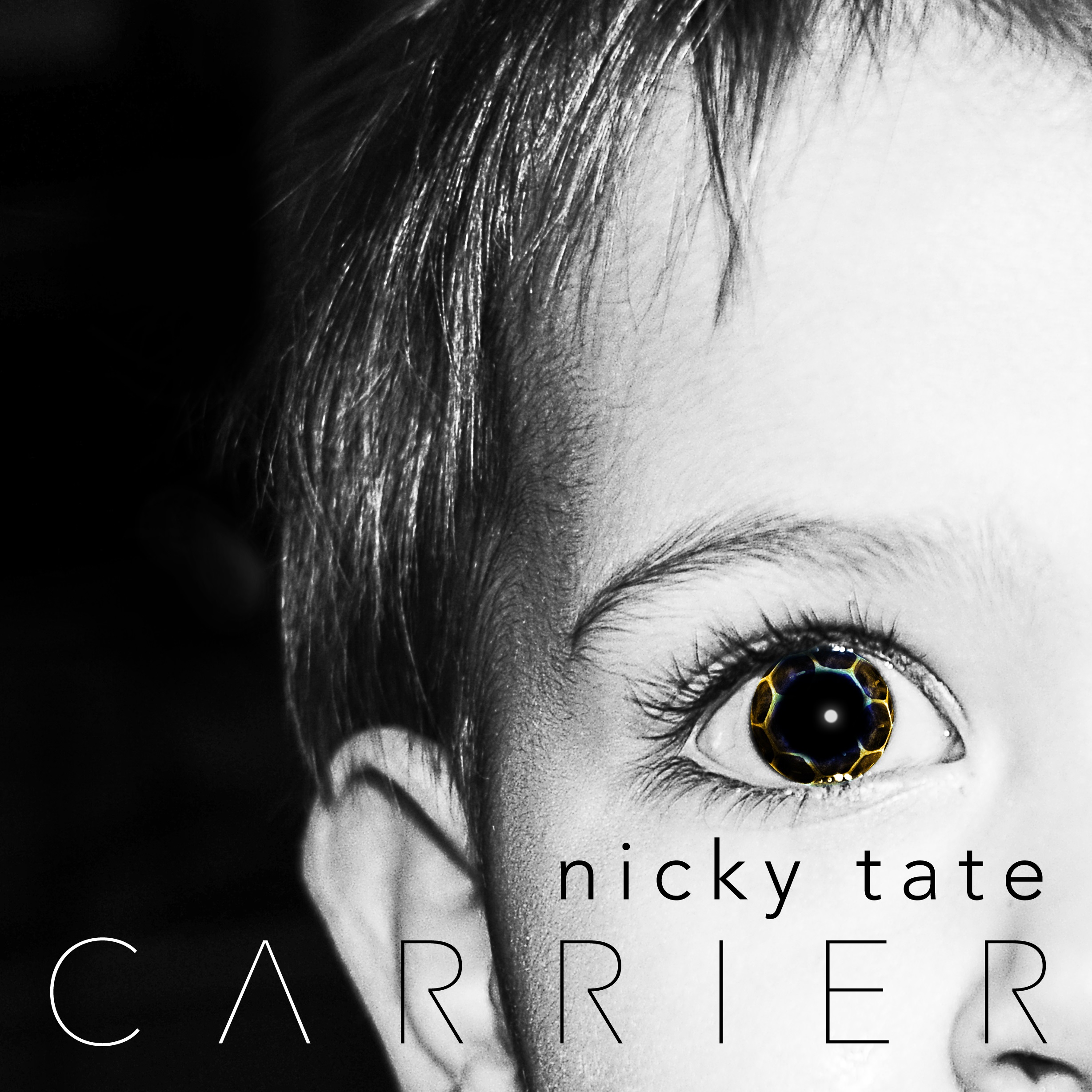
 Carrier is submitted for the Blue Cat Screenwriting Competition and I also recently submitted it to a specialist screenplay agency. So how’s that going?  *Insert tumbleweed* although I get feedback from Blue Cat even if I don’t win so there’s something to *gulp* look forward to.


10612539_10154743973245556_2306850364778141455_n

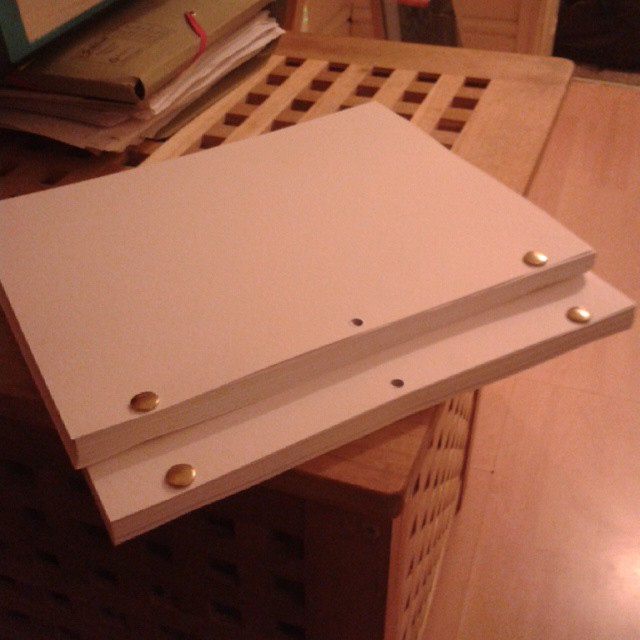
This week Carrier also achieved the mark of 75 as my dissertation for my MA and to be honest I really hoped it might score a few more points than that.  Yes I know.  Greedy Greedy Greedy.  But I’ve never crafted anything as carefully in my life and I KNOW it is exceptional.  Trust me I’m happy to describe my work as shite when it is … but this really isn’t.   Just look at it in its US bindings.  It’s a thing of beauty.


mendez1My Mendez Bolivar short story “You See How It Is” was entered for the Bridport Prize but short-listers have been notified… and I’m not one of them.  I submitted it for the Costa short story competition too.  That doesn’t get announced for ages.  January even? I like the character of Mendez Bolivar more than the story (which I suspect may be shite) … so not sure I’ll pitch it again as it stands.  Perhaps I’ll put Mendez in another setting.  If I can be arsed.  Prose isn’t where my head is at right now.


allenroad

Allen Road, the TV drama pilot collaboration with LJF has been in a intensive process of rewrites as we draw closer to its spiritual home, The annual Channel 4 Screenwriting Competition.  It didn’t place last year but certain feedback we’ve had makes us think it’s worth trying again.  It’s sooo good and much tighter than it was last year (and it was pretty tight then).  The concept and the universe are coherent, fascinating and terrifying and I love it.


thefadeIn fact the same could be said about The Fade, our other co-written script. Our plans for this are slightly different to Allen Road; it’s a pilot for a three-parter as opposed to a season of eight episodes so we will be targeting different channels and production companies in due course although we are concentrating on Allen Road at the moment.  Beautiful weird universes seem to be a theme in the stories we create together, and they are my favourite place to hide most of the time.


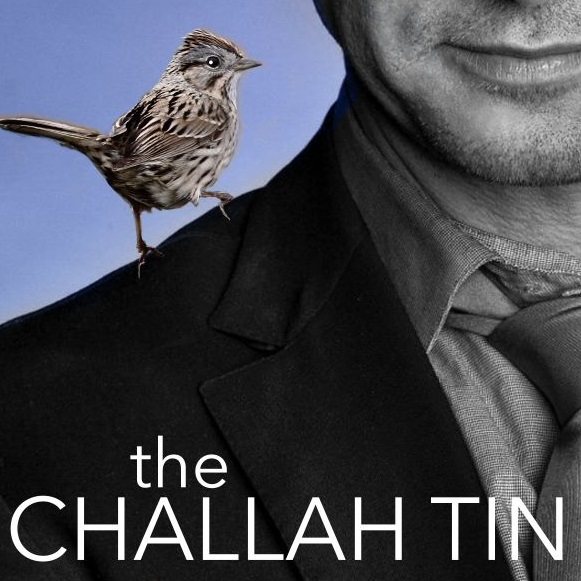
challahtinThe Challah Tin, my novel, is sitting with two different agents at the moment, both of whom have asked for more time to consider it. That’s gone a bit quiet but having recently chased them I’ll take silence over a rejection any day.  I’ve struggled to feel confident with it in novel form so it was invigorating to convert it into a radio play last month.

The conversion came about because someone reminded me about the BBC Writer’s Prize.  It’s a prize for Radio Drama.  The Challah Tin is fairly topical, and dramatic; there are some nice evocative time-shifts and imagery; things like bird-covered mountains and, in a different time zone a busy 1980s greasy spoon cafe.  Scenarios I could hear as well as see.  There’s only really one home for radio drama (BBC) and so this was an ideal opportunity.  I only had four days before the deadline so I had to work pretty fast.

To cut a long story short… I cut a long story short.  It took a lot of hackwork but was aided by me knowing the story inside out and being quite a dialogue-heavy prose writer.  I ditched so many characters: wide-boy racist dog-owner Mike, Kenny the Chinese gangster, terrible goth Vonnie and countless countless scenes including The Embarrassing One With The Prostitute.  It became a slightly different story in the telling.  Necessarily concise with clear progression, it had a lot in common with the magazine fiction I used to write; this is weird as you don’t normally think of Radio 4 as having much in common with Take A Break.  So that’s done.  In the cold light of day I think it’s actually much better in this format.

Perhaps I just need to stick to scripts.  I do love scripts.

I am completely fine with losing competitions.

compWhat am I saying?  I hate losing. Really hate it! It hurts and makes me feel like crap for days, weeks or even longer depending how much I wanted The Thing.

Entering competitions takes time and energy, not least the mental energy to focus on the entry T&Cs which will be very nearly the same as the last comp you entered …. but NOT THE SAME.  NOT THE SAME AT ALL.

Some comps want three chapters.  Some want 10k words.  NOT THE SAME.  And you MUST include your details on each page… unless they want everything anonymised.  Formatting generally must be standard:  12pt Times New Roman for prose, Courier for Screenplay. You knew that right, loser?  But don’t assume they have the same policy on paragraph indents.  Oh no.  And you might have to zhush up a PDF while you’re at it.  Or Word might be OK.

Then there’s the SYNOPSIS!  You know that massive thing you wrote?  Maybe it’s 100,000 carefully crafted words over 200 pages.   Well can you just… y’know give us the gist?  In 100 words.  No.  300 words. Make it 1000 words.  Actually make it a one page synopsis.  Actually you’ve probably got those summaries already.  Um… can we have, um, a poem that summarises your main theme.  A poem in 200 words.  You’ve already got that on file?  Damn.  200 CHARACTERS we meant.  Heh heh heh…

The more well-respected the prize, the less cuddly the conditions.  They’ll have words like VITAL, NO EXCEPTIONS and tight-lipped pleadings to remember that they get around seven billion entries so, you know, as Ru Paul would say Don’t F*ck It UP.  And don’t click on that link unless you want to hear swearing.  (That’s a suggestion from me, not a competition condition.  Obviously).

I appreciate clear direction, really I do but it does leave you in no doubt as to your chances, their importance and your own insignificance in an infinite cold cold universe.

And the virtually inevitable losses ARE heartbreaking…

But I still think it is worth it.  Just.  Your work won’t win you anything sitting idle on your hard drive will it? If the work is done, and you’re proud of your stories, then you’re no worse off whatever happens*.

*Unless there’s an entry fee.  Please refer to the Terms & Conditions.

Pitching, pleading, proposing…

1970430_10154754210740556_5153542718180012540_n

I’ve just got hold of the new Writers’ and Artists’ Yearbook which means it’s time to start hustling again.  I don’t know anyone who loves doing this sort of thing.

I’m no expert but over the years of pitching, pleading and proposing I have committed plenty of rookie errors, and also made a few discoveries which I thought I’d share so you can point and laugh benefit from my experiences.

One size probably doesn’t fit all

If like me, you write lots of different things (prose, scripts, poetry) you might like the idea of just getting one agent to handle it all.  Unfortunately it is unlikely you are going to find an agent who is interested in EVERYTHING IN YOUR COMPUTER.

Even if an agency stupidly encourages you by stating that they will consider submissions in all formats I suspect that they don’t mean all at once from one person.

The one time I enthusiastically sent a poor agent my entire back catalogue (each part conforming to the agency’s submission criteria I add)… well, I got the fastest rejection ever.  Seriously, I think the woman looked at the confusing mass of attachments and went “nope” on principle.    There literally wouldn’t have been time for her to open the attachments, so fast was that rejection.  It was like SEND. NO THANKS. oh, that’s a pity.  *lifts finger off send button*

However appealing it is to imagine selling all your wares wholesale, I’ve come to the conclusion that it is better to choose your best work and target it narrowly and precisely.  Make sure the person you are sending it to is documented as being supremely enthusiastic about the exact sort of thing you have written.  Stacks of agents have chatty profiles on their websites where they tell you exactly what they’re looking for so it is worth looking through their profiles and seeing if there are some clear matches.

A consequence of this is that you might target your screenplay to one agent over here and your novel to a completely different agent over there.   I think that’s okay.  It might even increase your chances and you’ll look less like a hyperactive schizophrenic.  Even if you are.  If you are, of course that’s great.  Obviously.  Well done.

You don’t always have to have finished writing the whole thing

Although generally agents only consider novel extracts which are part of a completed whole, I was surprised to find that some agents don’t actually mind if you haven’t actually finished writing it yet.  Unfortunately it’s quite hard to work out which agents take this stance.  In one instance I chatted to an agent after a talk she gave for writers and found that she really didn’t mind even though the agency website claimed otherwise.  Maybe she was just messing with me.  It meant I could pitch something I was developing.  She was kind enough to tell me it sucked, so that was nice because it that saved some time I would have spent writing more sucky prose.  Obviously I had a little cry before I said thanks.

Of course you could wing it, send it your submissions and neglect to mention that the book is incomplete and only worry about it when they ask to see the rest.  All I will say is that I’ve written a mass of chapters in a weekend one time to make reality meet an agent’s expectations and the mental strain of forcing so many words out of my eyes at speed nearly killed me so good luck with that.  (Then they said it sucked).

And whilst honesty is important, if you do state that the novel is not quite complete, maybe don’t go on to explain that the trouble is that you’re struggling with the plot, or you’re not sure the idea is strong enough and what do they think?

If it’s incomplete and the agent’s OK with that just state how many words are down, how many more you expect to write, and leave it there. I cringe when I see some of my cover emails and letters from years back, babbling on about all sorts of irrelevant shite. Less is more.  Apart from where words in the actual book are concerned in which case, um.  more is probably more.  But you knew all this already right?

You don’t have to have written anything

More seasoned writers, especially those from journalistic backgrounds have known this one for ever.  It was a surprise to me. I’m not very bright though.  With Non-Fiction works it is possible to sell the idea to an agent before you’ve written the book.  This is often the case where the backing of a publisher and an advance would be necessary to fund the research for the work.   It’s sort of obvious when you think about it.

The newish book category of Creative Non-Fiction means even liars writers of fiction can in theory at least try to exploit this way of getting a deal. If you go down this route you’ll need a kick-ass book proposal where you explain precisely what you have in mind, where it fits in the market, who’s going to buy it and why you are the right person to write it.  And probably a sample chapter or two.

It’s a shame Non-Fiction is about the only genre I’m not interested in writing because it sounds like a much more efficient way of doing business.

A Writer’s CV isn’t like a like a CV

Sometimes agents seem to want a CV but what they mean is a Writer’s CV.  Whether or not you have a driving licence and A-Level English probably isn’t relevant.   You knew that already too?  Jeez you’re so much better at this than I am.

Explore other sources of humiliation

There are loads of writing competitions out there for almost every type of writing from flash fiction to full length screenplays.  Contests run all year round, many with large cash prizes and the opportunity to get some feedback.  Some require an entrance fee and some are better respected than others.

Don’t forget journals, magazines and online blogs; there are lots of avenues to sharing your work.

I think it’s nice to enter a few comps and so forth, as well as targeting agents so that you can experience crashing disappointment in all its various forms.  Also it’s a special thrill to keep an anxious eye on social networks and see other people announce they’ve been shortlisted when you haven’t. When you do get a bit of luck though, it is the best feeling in the world.

So ends this round up.  Like I said my meagre triumphs hardly make me an expert but if it prevents even one person from looking like a twat then I consider it worthwhile.  You’re welcome.

*Insert Punchline*

10561630_10154743914010556_5723962199879512917_n

It has been enjoyable working through the Beano scripts.  Writing jokes or puns and crafting little silly scenes isn’t particularly easy but it is fun.  It probably helps that both my sons are addicted to Tom & Jerry and other old cartoons on Boomerang; each one is a teeny master class in cartoons and punchlines.  And punching as it happens.

My youngest asked me why Pepe Le Pew was smoking the other day.  Squinting at the screen I was actually more disturbed at how much of a sex pest Pepe is.  Never mind Everyday Sexism that bloody skunk needs a restraining order and I’m sure I’m not the first to make this observation.

I find the slapstick of these old cartoons to be quite bracing in general compared to most of the offerings on kids telly. Amongst the Disney sass and moralistic fluff there are however some clever modern kids cartoons to be found; Gumball I like, and Oggy & The Cockroaches certainly carries on the Tom & Jerry tradition of retributive justice via the medium of pickaxes and anvils.

In terms of comics I was probably more of a Whizzer and Chips / Buster fan as a kid but I certainly read the Beano a fair bit. My favourite strip in the Beano is and was Calamity James.  You can see the first strip here. The little squidgy things which follow him around with captions, and the articulated sound effects still make me laugh and the artwork is exquisitely evocative of my childhood.  Those strips don’t look like anything else.

Writing one liners is an interesting process.  Yes you can mine a million of these off the internet and joke books but once you have written a certain volume of content you just see the same gags coming round again and again.  At some point you have to buckle down and invent some.  I feel like Alan Partridge recommending a book by Nigel Rees but I have his Dictionary of Phrase and Fable which has provided me with a lot of punchlines and you basically work backwards.  It’s inelegant but it results in the kind of word play which I think kids like. Gold dust as Alan would say.

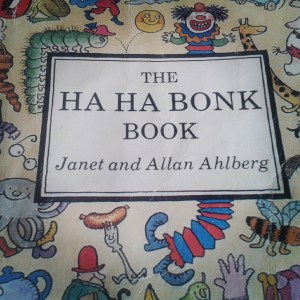
What makes a good joke for children? I’ve read a lot of joke books for kids (one of my favourite books as a kid was the Ha Ha Bonk book). Often they contain very old jokes and as an adult you roll your eyes and think “money for old rope” (tweetabix…  oinkment… pull yourself together etc).  These old chestnuts are however beautifully clear and unambiguous and perhaps as much a part of our oral tradition as Little Red Riding Hood (and there’s another story that’s been sanitised into banality,   The wolf ATE granny he did NOT hide her in the cupboard.  The woodcutter KILLED the fox he didn’t shake his sodding fist at him)…

So I’ll let the old jokes off but it bugs me more when I see jokes still circulating even though their frame of reference has long since gone.  What’s the point of a punchline about a man setting “a new world record” in relation to music when music hasn’t been on “records” for thirty years?  If I showed my children an LP they’d think it was a tablemat.  I’d also be a little wary of using the term “new world record” in a punchline to a generation  of small children who have grown up without Norris McWhirter… but that’s probably overcautious.

Often you get expressions used in a punchline which haven’t dated as such, but which just aren’t in a kids frame of reference; ha on that topic: Why did the picture go to jail?  Because it was framed.  Being “framed for a crime” isn’t a phrase kids are likely to have come across unless they are from Chicago.  In the 1940s.

Of course part of the fun of jokes is learning stuff through the word play.  Another favourite book of mine was the Whizz Kids Handbook and it used the word “Dossiers.” quite a bit.  The word fascinated me.  Perhaps I am guilty of double standards here.  I have stated that I don’t like bland kids telly but by removing tricky references in jokes am I saying that I prefer to anodise jokes to make life easier?

I guess my cautiousness springs from having to explain to my children a million punchlines which weren’t instantly crystal.  I’m certain these explanations were aiding my children’s understanding, use and dare I say even love of language but… NOTHING kills a joke stone dead like having to explain it.

I’ll finish this entry with my favourite joke:

What’s the last thing that goes through a fly’s mind when it hits a window?

Its arse.

The cost of working from home.

birdOver twenty years working in radio, surrounded by some beautiful open-minded creative people, (and some wankers) I have learned all sorts.  For example, I know that there isn’t really a “lucky caller number nine.”  The presenter just picked up the phone OK?  You knew that, right?

More interestingly, I learned how to creatively brainstorm.  It is a certain relaxed state of mind where you don’t mind looking a bit of a twat and whereby you learn to articulate exactly what is in your head and explain any tangents that come to mind in a way that presumes people are interested.

It takes confidence because you have to believe that those around you (in a place of work this may include your manager) aren’t going to judge or sack your arse for whatever cray cray thing it is you’re about to say.  Confidence is forged from leaps of faith where there is a crash mat.  I recall when I was in my early twenties, at all these radio stations, being put on the spot all the time to come up with an idea for a show… or a competition… a gag… or an opinion… and freezing, mouth open… but then forcing an idea out somehow.  They were probably shite ideas.  But the more practice you get the better you get at saying something and if you’re lucky the better the ideas get.  Maybe you just care less.  Whatever.  They were cool places to work.

I can pull ideas and words out pretty easily now.  They still might be crap but I suppose I am confident enough to have a mechanism where I can keep rattling ideas out until one goes ding.  Ideas don’t scare me.

I’ve worked at home for seven years now and it certainly has benefits when you have babies and when children are small.  No doubt about it.

But there’s no one to brainstorm with.  Especially now the MA is over with.  No one’s asking for an idea.  I’m not prompted to respond to anything other than emails.  Children are both in school now.

That’s why I’ve been looking at co-working space in Birmingham.